Category | IT Service Management
Last Updated On 16/04/2026
Did you know that over 3 million professionals worldwide are ITIL-certified, making it one of the most widely adopted frameworks in IT service management today? Despite this widespread adoption, many professionals still struggle with a fundamental question: ITSM vs ITIL the same, or do they serve entirely different purposes?
This confusion isn’t just academic, it directly impacts how organizations design, deliver, and improve their IT services.
If you’ve ever asked yourself:
You’re not alone and you’re in the right place.
Whether you're an IT professional aiming to optimize service delivery, a service manager aligning IT with business goals, a fresher entering the IT domain, or a certification aspirant, understanding ITSM vs ITIL is no longer optional it’s essential in a fast-evolving, digital-first ecosystem.
In this guide, we’ll clearly break down the ITIL vs ITSM difference, explore how they complement each other in real-world scenarios, and most importantly, uncover how ITIL (Version 5) is transforming traditional IT service management into a more agile, value-driven, and future-ready discipline.
Before diving deeper into ITSM vs ITIL, let’s understand ITSM first.
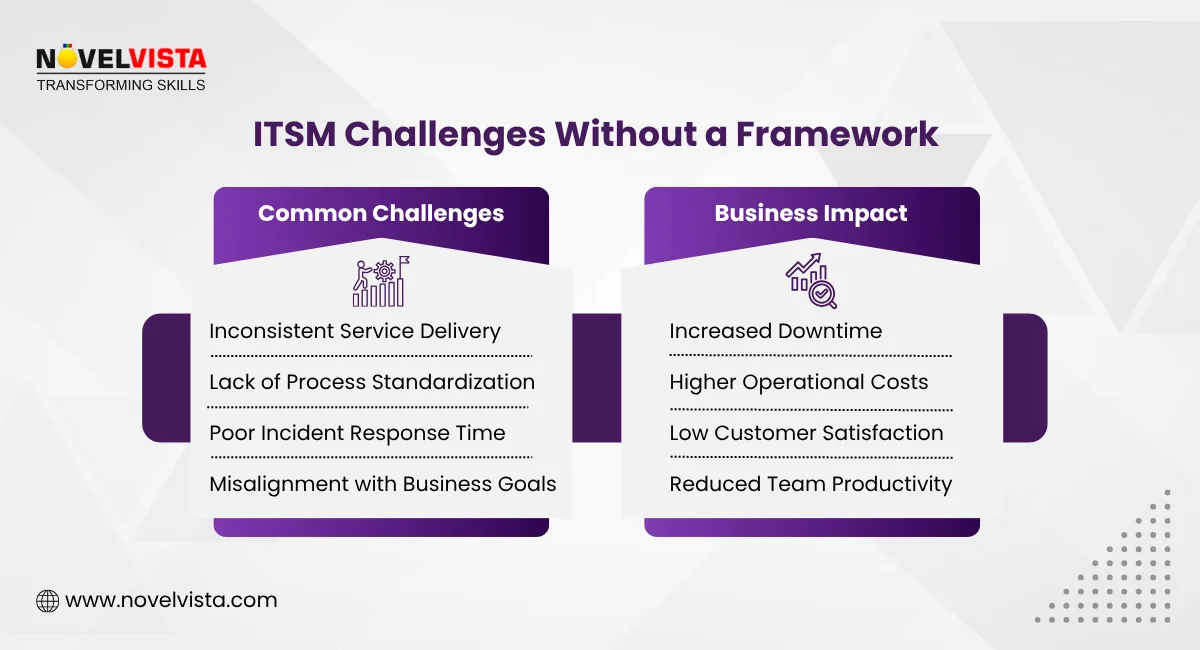
ITSM (IT Service Management) refers to the entire approach of designing, delivering, managing, and improving IT services.
It focuses on aligning IT services with business needs and outcomes.
ITSM is not a tool or framework it is a strategic discipline.
In simple terms:
ITSM defines WHAT needs to be done to manage IT services effectively.
Now let’s understand the second half of ITSM vs ITIL.
ITIL (Information Technology Infrastructure Library) is a framework of best practices designed to help organizations implement ITSM effectively.
With the release of ITIL (Version 5), the framework has evolved significantly to meet modern business needs.
ITIL (Version 5) provides end-to-end lifecycle guidance for managing digital products and services while ensuring consistent value delivery.
In simple terms:
ITIL defines HOW to implement ITSM effectively.
The conversation around ITIL vs ITSM difference has changed with the introduction of ITIL (Version 5).
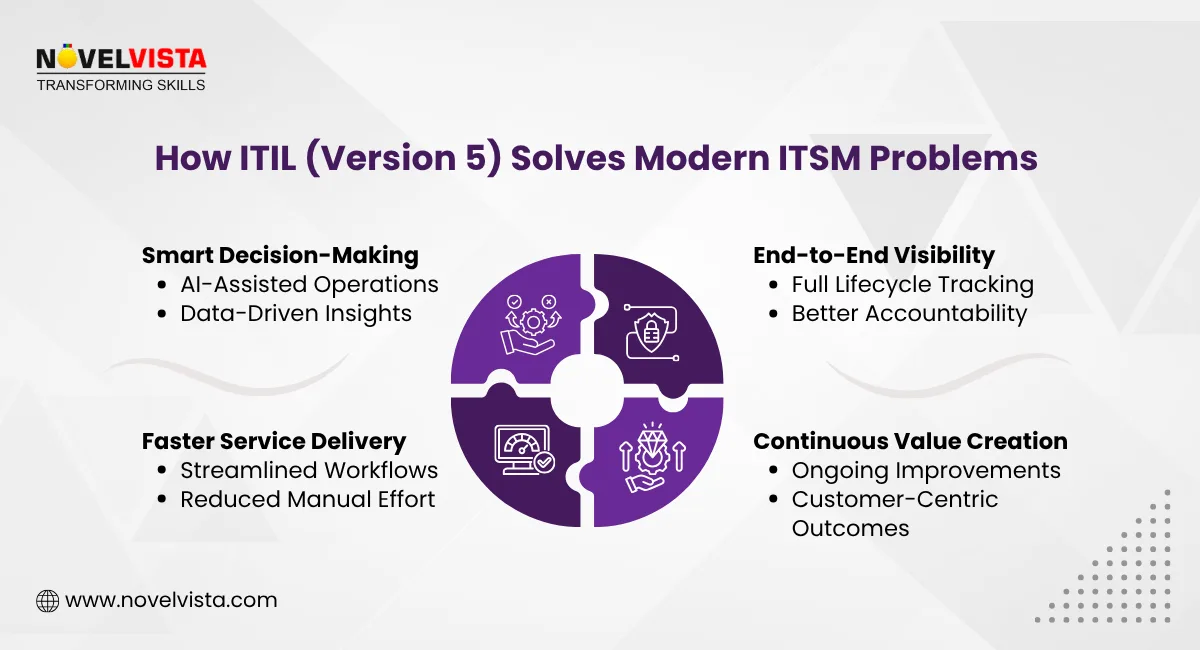
Modern IT environments are increasingly powered by AI, automation, and data-driven decisions. ITIL (Version 5) is designed to support intelligent workflows, predictive analytics, and faster resolution of issues. This enables organizations to move from reactive support to proactive and automated service management.
Earlier ITIL versions focused primarily on managing IT services in isolation. ITIL (Version 5) expands this view by integrating digital products and services, reflecting how modern businesses operate. This shift helps organizations deliver more holistic, user-centric experiences.
ITIL (Version 5) takes a comprehensive view of the entire lifecycle from strategy and design to delivery and continuous improvement. This ensures that every stage is aligned with business objectives and customer expectations. It eliminates silos and promotes seamless collaboration across teams.
Organizations no longer operate in isolation; value is created collaboratively with customers and stakeholders. ITIL (Version 5) emphasizes understanding user needs and delivering outcomes that matter. This approach strengthens relationships and ensures long-term business success. ITIL (Version 5) Certification Cost varies depending on the training provider, course format, and included resources, but it is a worthwhile investment for gaining globally recognized ITSM expertise.
Understanding the ITIL vs ITSM difference becomes easier with a direct comparison.
Aspect | ITSM | ITIL (Version 5) |
Definition | IT service management approach | Best practice framework |
Purpose | Manage IT services | Guide ITSM implementation |
Nature | Conceptual | Structured |
Scope | Broad | Specific |
Focus | Service delivery | Value-driven lifecycle |
Flexibility | High | Standardized guidance |
Dependency | Independent | Supports ITSM |
When comparing ITSM vs ITIL, remember:
To simplify what is the difference between ITIL and ITSM, consider this:
Without ITIL, you can still run operations but with it, you achieve:
This is the practical ITIL vs ITSM difference.
Now that we understand ITSM vs ITIL, let’s see how ITIL (Version 5) improves ITSM practices.
ITIL ensures that ITSM goes beyond routine technical execution and focuses on delivering measurable business outcomes. Every activity, process, and service is aligned with creating real value for customers and stakeholders. This shift helps organizations prioritize what truly matters impact over activity.
ITIL (Version 5) breaks down traditional silos by connecting teams across IT, business, and product development. It encourages shared accountability, improved communication, and cross-functional workflows. As a result, organizations can deliver faster, more consistent, and customer-centric services.
Improvement is no longer a one-time initiative but an ongoing practice embedded throughout the ITIL lifecycle. ITIL promotes a culture of regularly evaluating performance, identifying gaps, and optimizing processes. This ensures services evolve continuously to meet changing business and customer needs.
ITIL (Version 5) is designed to work seamlessly with modern technologies like cloud computing, DevOps, AI, and automation. It provides flexible guidance that supports rapid innovation while maintaining control and governance. This makes it highly relevant for organizations operating in dynamic, technology-driven environments.
This makes ITIL (Version 5) highly relevant for modern ITSM environments. Why Choose ITIL (Version 5) Certification? Because it equips you with modern, AI-aligned IT service management skills, a value-driven approach, and globally recognized credentials to excel in today’s digital-first organizations.
If you're still thinking about ITSM vs ITIL, here’s when ITIL becomes essential:
ITIL certification is especially valuable for:
The conversation around ITSM vs ITIL is often framed as a choice but in reality, they are strongest when used together, not in opposition.
At its core, ITSM defines the goal delivering efficient, business-aligned IT services while ITIL defines the method providing structured, proven practices to achieve that goal.
With the evolution of ITIL (Version 5), organizations are no longer limited to traditional service management models. Instead, they can embrace a more holistic, AI-enabled, and value-driven approach that aligns IT with modern business demands, digital products, and continuous innovation.
Ultimately, understanding the ITIL vs ITSM difference is not just theoretical knowledge it’s a practical advantage. In today’s fast-moving digital landscape, mastering ITSM vs ITIL is essential for professionals and organizations aiming to deliver consistent value, improve efficiency, and stay competitive.
Ready to take your understanding of ITSM vs ITIL to the next level?
Join NovelVista’s ITIL (Version 5) Foundation Certification Training and gain practical insights into modern IT service management, AI-driven practices, and value-focused service delivery. Designed for IT professionals, service managers, and aspiring ITSM experts, this course equips you with globally recognized credentials and real-world knowledge to implement ITIL effectively in today’s digital landscape.
Start your ITIL 5 journey today!
Author Details

Course Related To This blog
ITIL4 Specialist Monitor Support and Fulfil Certification
ITIL® 4 Strategic Leader Digital And IT Strategy (DITS)
ITIL® 4 Specialist Drive Stakeholder Value
ITIL® 4 Specialist High Velocity IT
ITIL® 4 Strategist Direct, Plan & Improve
ITIL® 4 Specialist Create Deliver & Support
ITIL® 4 Foundation Certification
ITIL V5 Foundation
Confused About Certification?
Get Free Consultation Call
Stay ahead of the curve by tapping into the latest emerging trends and transforming your subscription into a powerful resource. Maximize every feature, unlock exclusive benefits, and ensure you're always one step ahead in your journey to success.